


Written by Rebel Capitalist AI | An Interview with Robert Barnes | Originally published on February 18, 2026
They called it a conspiracy theory.
Not a fringe, tin-foil-hat theory either...a dangerous one. The kind that gets you shadowbanned, dismissed, and written off as someone who’s lost the plot. The claim was simple: the reason governments around the world refused to fully release the Epstein files is because doing so would expose how power actually works in the Western world. Not the civics-class version. The real version.
That claim is no longer a theory.
The files are out. The names are trickling through. The architecture of the operation...the blackmail, the access, the systematic compromise of people in positions of power across finance, politics, and intelligence...is no longer something that can be waved away with a press statement. The story wasn’t that one sick man ran an island. The story is what that island was for.
So let’s talk about what’s actually been revealed, why the official response makes no sense on its face, and what the structure of this cover-up tells us about where power in America actually sits in 2025.

The Prediction That Aged Perfectly
Six to eight months ago, the argument was straightforward: Epstein wasn’t just a wealthy pedophile operating alone. He was a node in a network...a perfectly positioned middleman whose utility to powerful people was precisely his willingness to go further than anyone else. The more depraved the appetite, the more exclusive his market position. That’s not a moral argument. That’s a business model analysis.
The prediction that followed was equally straightforward: full disclosure would implicate not a handful of bad actors but a systemic cross-section of Western power. Politicians, financiers, intelligence figures, foreign heads of state. Not all of them. But enough of them that any single government attempting genuine transparency would immediately be setting fire to its own elite class.
That’s why no government wanted to release the files. Not because of national security. Not because of ongoing investigations. Because of institutional self-preservation dressed up as due process.
What’s now confirmed? Essentially all of it.
And yet the official narrative has bent itself into a pretzel trying to contain the damage. The most telling signal? President Trump...who many expected to be largely exonerated by the files, and who by multiple accounts did cooperate with investigators, helped victims’ lawyers, and distanced himself from Epstein years before the arrests...signed off on a disclosure strategy that neutered the most damaging revelations.
How does that happen?
How Trump Got Snookered
Here’s the hypothesis, and it’s more coherent than anything the mainstream press has offered.
Trump’s exposure in the Epstein files was likely, at worst, peripheral...and at best, actively exculpatory. Reports confirm he cooperated with early investigations, provided testimony that helped prosecutors, and severed ties with Epstein well before the operation became a federal matter. A full, unredacted release probably would have helped Trump politically while devastating a who’s-who list of Washington and Wall Street insiders.
So why didn’t that happen?
Because the people advising him on this decision...Pam Bondi and Todd Blanch...had a different set of interests. The theory: they lied to Trump about what the files contained and what the political fallout would look like. And in exchange for burying the most explosive material, they secured something valuable for themselves.
What did they want? The Justice Department.
Not to use it as a prosecutorial institution. To use it as a revenue stream.
The deal, as it appears to have been structured: the Deep State walks. No prosecutions for January 6th orchestrators, no accountability for COVID-era policy decisions, no reckoning for the Russiagate apparatus or the censorship infrastructure. All of it gets quietly shelved. In exchange, DOJ political appointees get a free hand to run the department as a corporate shakedown operation...steering merger approvals, antitrust decisions, and regulatory outcomes toward whoever is paying the right lobbyists.
One million dollars per lobbyist. Per case. Paid by Hewlett Packard Enterprise to MAGA-connected consultants Mike Davis and Arthur Schwartz…documented in Tunney Act court filings and reported by the Wall Street Journal…to defuse a merger challenge that Gail Slater’s antitrust division had spent months building.
The figures didn’t come from a whistleblower or a FOIA request. They came from Roger Alford, the DOJ’s own fired antitrust official, who named Davis and Schwartz publicly at the Tech Policy Institute’s Aspen Forum in August 2025. It’s sitting in court records and the financial press, largely unconnected to the Epstein narrative in the coverage. Which is precisely the point. Compartmentalization isn’t just for intelligence operations anymore.
The Canary They Just Killed: Gail Slater and the Antitrust Question
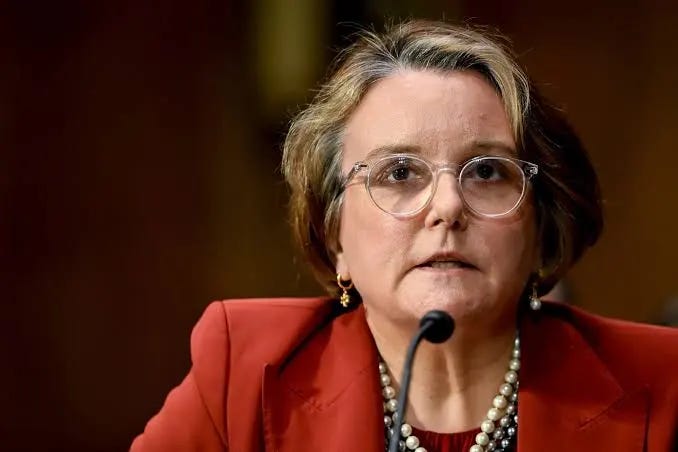
If you want a concrete indicator that the DOJ-as-cash-register theory is correct, look at what happened to Gail Slater.
Slater was the head of the DOJ’s antitrust division. By most accounts, she was the last political appointee in the Trump Justice Department operating with genuine institutional independence. Her mandate was to do what Teddy Roosevelt did...use the full weight of federal antitrust authority to break up the unnatural monopolies that are quietly destroying American market competition and, not coincidentally, inflating prices for ordinary people.
She was fired.
Think about what antitrust enforcement actually touches. The four companies that control American beef production. The handful of insurers that have consolidated healthcare. The pharmaceutical distribution networks. The grocery chains. In every one of these industries, the same dynamic is operating: federal regulatory requirements that only the largest players can afford to satisfy, creating a legal moat that prevents competition from below while concentrating pricing power above.
This isn’t free market capitalism. It’s regulatory capture wearing a free market costume. And the prices consumers pay...for food, for medicine, for healthcare...are the direct result.
Slater was going to go after it. So she had to go.
Her replacement won’t be someone with a mandate to enforce competition law. It’ll be someone with a mandate to manage the negotiation...to decide which mergers get approved and which corporations need to make the right phone calls to the right lobbyists before the problem disappears.
That dog don’t hunt as antitrust enforcement. But it works perfectly as a cash register.
That’s the machine. And the Epstein cover-up is what paid for the political cover to run it.
What the Epstein Files Are Really Revealing
Step back from the specific names and legal mechanics for a moment. What does the structure of this operation actually tell us?
It tells us that the most effective mechanism for maintaining elite control isn’t ideology, propaganda, or even money...although all three play a role. It’s compromise. It’s the systematic accumulation of leverage over people in positions of institutional power. Epstein’s operation wasn’t a bug in the system. It was infrastructure.
Think of the global power structure like a string of Christmas lights wired in series...the old kind, where one bad bulb takes out the whole strand. Epstein was just one bulb. But the reason everyone scrambled to contain the damage isn’t that one compromised operator matters that much. It’s that the system was wired to depend on each connection holding. Pull one, and you see how the whole thing is built.
That’s the real story. Not one man, not one island. The wiring.
And that wiring doesn’t follow party lines or national borders. The infrastructure served a class...a globalist financial and political class for whom nationality is a tax domicile and governance is a risk management tool. That’s why every major Western government and financial institution has an interest in keeping the lid on. It’s not a Republican problem or a Democrat problem. It’s not a US problem or a UK problem. Facts don’t care about those categories.
What’s different now is the lid is cracking...not because of prosecutorial courage or journalistic integrity, but because of information architecture. The mainstream press attempted to bury the file releases. They largely succeeded in their own channels. But those channels no longer have monopoly control over what the public actually sees. Social media, independent video platforms, and decentralized information networks have collectively destroyed the gatekeeping function that legacy media used to perform.
Every day, someone who previously had no reason to question institutional authority watches something that changes their model. That process is cumulative. And it doesn’t reverse.
The Fork in the Road...and What to Watch
The choice ahead is binary, and the framing holds: the next ten years end either in dystopian oligarchic consolidation or in a genuine return to constitutional principles of limited government and individual liberty. The comfortable, normie-politics equilibrium of the last two decades is no longer available. The center didn’t hold. It collapsed.
There are no certainties here...only probabilities. And the variable that shifts those probabilities isn’t which party controls Congress or who sits in the White House. It’s public consciousness. Specifically: at what rate are ordinary people updating their model of how power actually works?
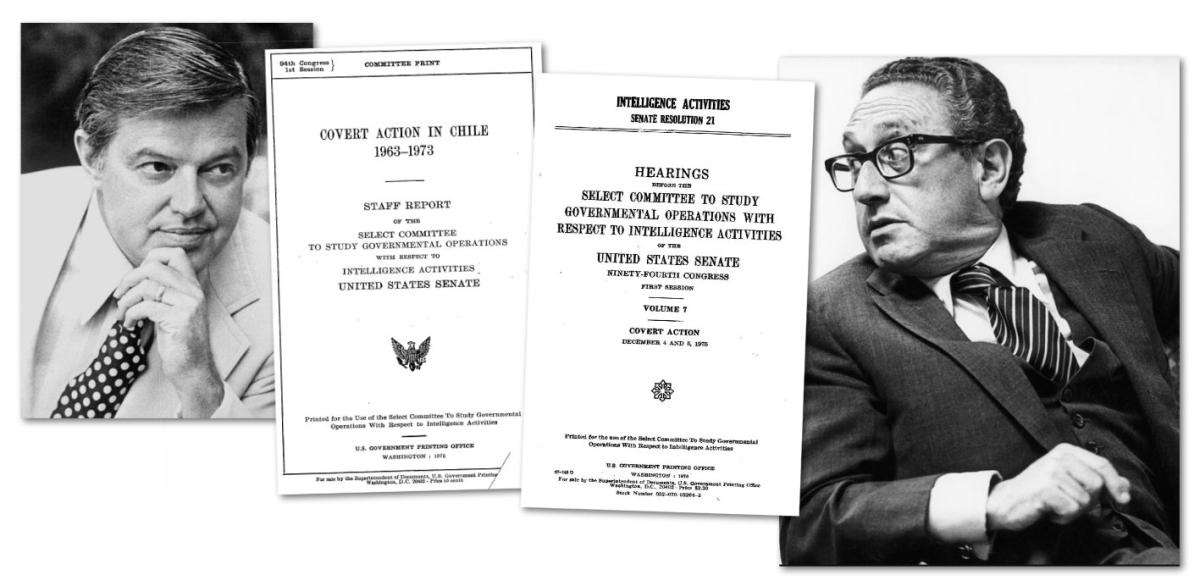
Historically, the only comparable moments...the Church Committee hearings in the late 1970s, which cracked open the CIA’s domestic assassination programs and turned Kennedy conspiracy theories into mainstream political debate...came when institutional exposure reached a threshold that couldn’t be contained by normal suppression mechanisms. The Epstein files have the structural potential to be that moment, but amplified by an information environment that didn’t exist in 1976.
The warning that comes with this moment is also worth heeding. The temptation, when someone you support is wielding government power in ways you approve of, is to want them to have more of it. To celebrate when they circumvent procedural constraints. To view constitutional friction as an obstacle rather than a feature.
That’s the trap. Every expansion of centralized executive power that feels good in the short run is power that the next occupant inherits. And if the Epstein files have demonstrated anything, it’s that the selection process for who occupies positions of power has been systematically corrupted for decades. Giving a corrupted selection process more authority is not a solution. It’s the problem, restated.
The files aren’t the end of this story. They’re the beginning of a reckoning that is going to continue working its way through public consciousness whether the institutions want it to or not.
Watch the antitrust cases that don’t get filed. Watch the prosecutors who get fired. Watch the lobbyist money that flows into Washington while everyone is focused on the culture war of the week. Watch whether public consciousness keeps moving...or whether people act like they did during the cerveza sickness and just defer back to the powers that be.
Those two things will tell you which direction this goes. One or the other is going to win out. And based on the probabilities right now, the outcome is genuinely uncertain.
That’s either terrifying or clarifying, depending on how you look at it.


