




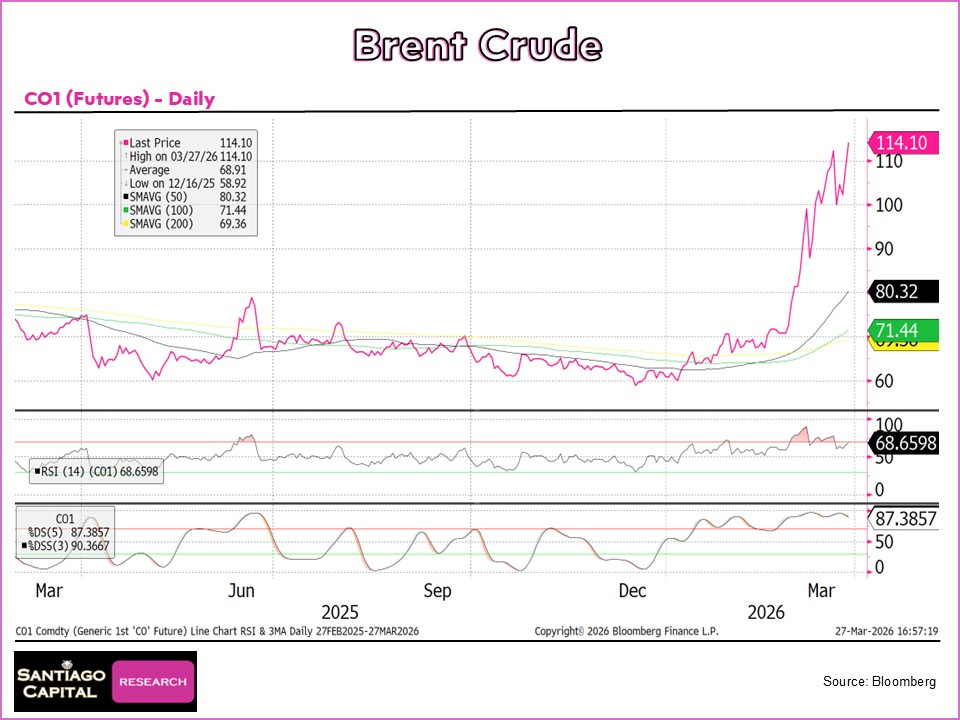
On Friday, March 27, something happened in markets that almost nobody in mainstream financial media connected the dots on. WTI crude oil surged to $99.64 per barrel, up $5.16 or 5.46% for the session, pushing briefly past the psychologically important $100 handle. Brent closed at $114.10. Gold was up. And the 2-year Treasury yield...fell.
If your first reaction is “so what,” you haven’t been watching the pattern that’s dominated markets for the past several weeks. Because that’s not how this is supposed to work.
When Oil Surges to $100 and Treasury Yields Fall: The Setup That Broke the Pattern
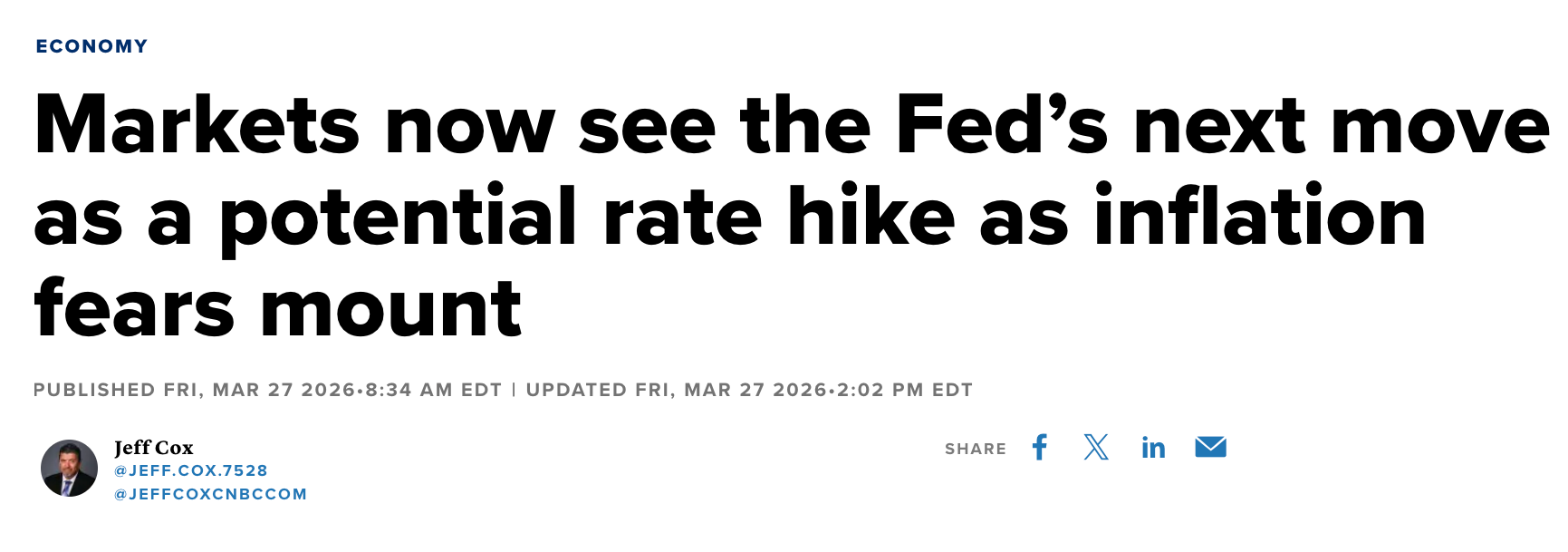
For the better part of the past month, the macro trade has been playing out in one direction: oil goes up, interest rates go up, gold goes down. The logic is simple enough. Rising crude prices push inflation expectations higher. Higher inflation expectations make the Fed less likely to cut...maybe more likely to hike. The 2-year Treasury yield, which is the most sensitive part of the curve to Fed policy expectations, dutifully marched higher every time crude ticked up. By Friday, futures markets pushed the probability of a Fed rate hike by year-end to 52%...the first time that threshold had been crossed in this cycle. So the mainstream inflation narrative had a clean, consistent, reinforcing story.
And then came the price action.
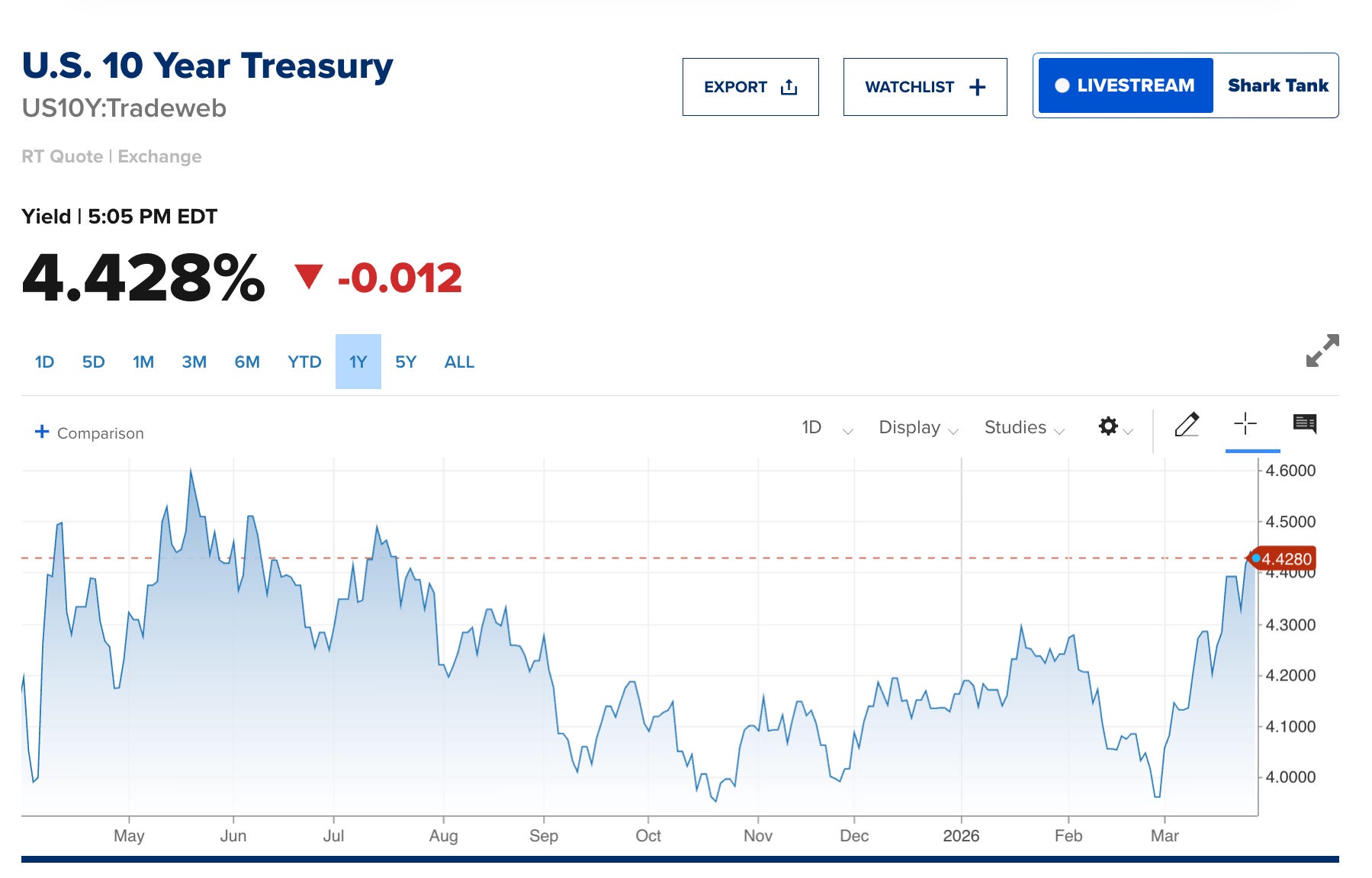
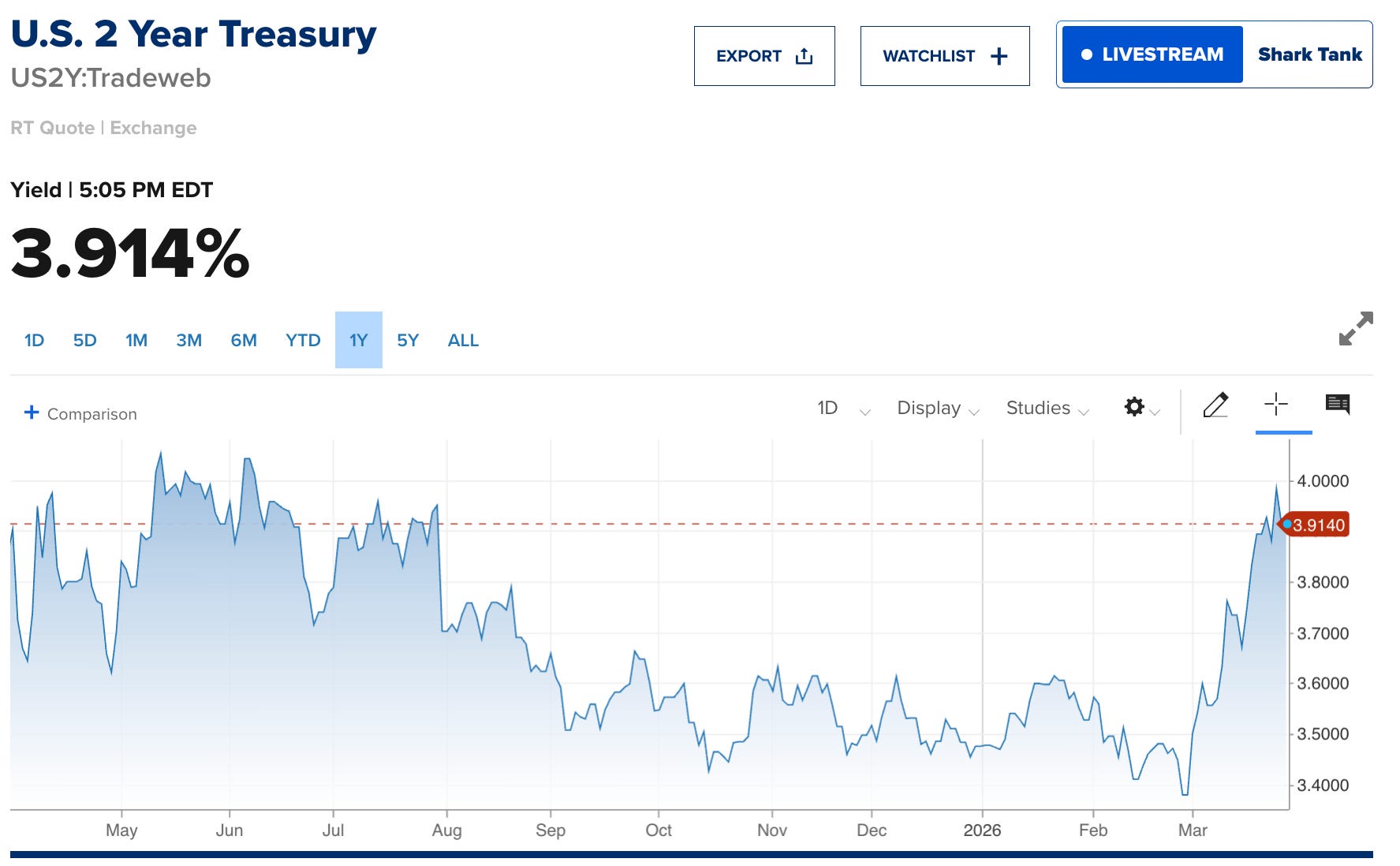
Oil surges nearly six percent in a single session. Under the pattern that has held for weeks, the 2-year Treasury should spike. Gold should roll over. The 10-year Treasury yield barely budged, inching up just two basis points to 4.42%...which is already unusual given the oil move. But the 2-year Treasury yield closed down roughly eight basis points to 3.91%. Gold was up. That’s a bull steepener...the yield curve steepening because short-term rates are falling, not because long-term rates are rising. It’s the exact opposite of everything we’ve been seeing.
One day is one day. Could be noise. But when a single session produces this kind of price action...completely inverted from an established multi-week pattern, on a session when oil is doing something extreme...it goes on the list of things to pay very close attention to.
So if oil exploding to $100 normally sends the 2-year Treasury soaring...what on earth is hitting the other end of the rope hard enough to drag it down eight basis points in the same session?
How the 2-Year Treasury Yield Tells You What the Market Actually Smells


