



![[Section Divider Image]](https://substackcdn.com/image/fetch/$s_!qXa1!,f_auto,q_auto:good,fl_progressive:steep/https%3A%2F%2Fsubstack-post-media.s3.amazonaws.com%2Fpublic%2Fimages%2Fee465fcc-ad70-44bc-be5f-77d03fb7eb71_1320x50.webp "[Section Divider Image]")
Everyone is watching the wrong number.
The U.S. dollar is crashing. That’s the headline. That’s the thesis. That’s what every macro commentator, every financial media segment, and every breathless social media thread has been pushing for months. The dollar is dying. Reserve currency status is evaporating. The BRICS are going to replace it. Just wait.
Come on, now.
Pull up a five-year DXY chart and what you actually see is a dollar sitting right around 99 today...roughly where it was in late 2019. Not exactly the death of American financial hegemony. But here’s the problem: the DXY might be the most widely quoted, least understood number in all of macro finance. And if you’re using it as your primary measure of dollar strength, you’re not seeing the full picture. Not even close.
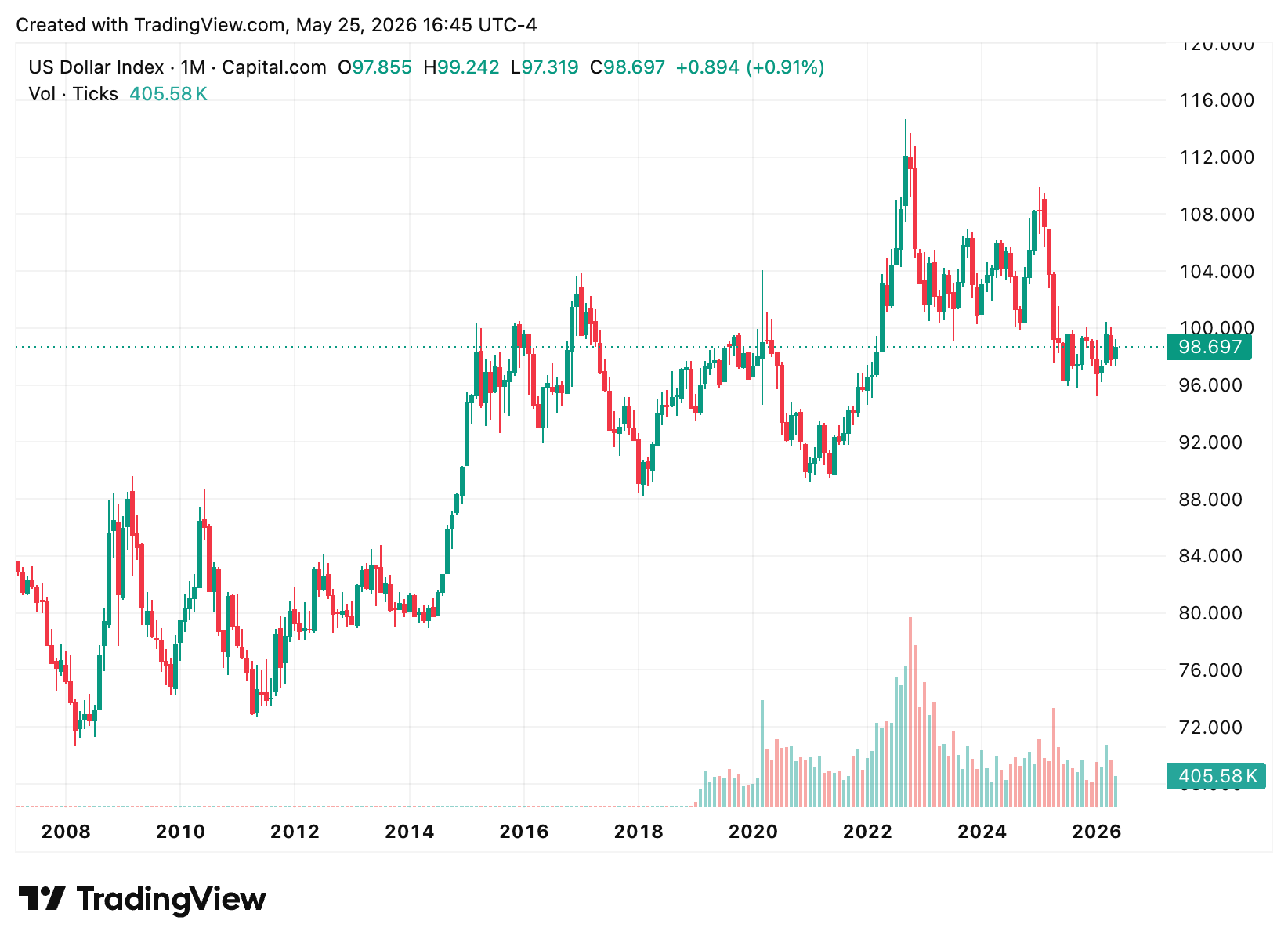
What’s actually happening is the opposite of the mainstream narrative. The dollar isn’t crashing down. In ways that matter enormously to billions of people, the dollar is crashing up. And the historical parallel that this dynamic most closely resembles ended with an emergency G5 summit at a New York hotel in 1985.
So here’s the question that should be keeping macro investors up at night: if the dollar is really as weak as the DXY suggests...why are central banks across Asia burning their reserves trying to stop it from rising? Let’s dig in and find out.


